
Why Choose Beam Load Cells?
Beam load cells from Eilersen are often preferred in applications where the weighing structure is exposed to vibration, lateral forces, shock, or equipment movement that may challenge other load-cell technologies.
This makes them particularly valuable in systems where:
- the frame or equipment may experience dynamic forces
- the weighing system must maintain accuracy during and after movement
- significant vibration, lateral forces, or impacts cannot be fully eliminated
- accurate, precise, and repeatable measurement is required without frequent recalibration
For many customers, beam load cells provide an effective balance of mechanical durability, signal stability, and integration flexibility.
Eilersen Beam Load Cell Models
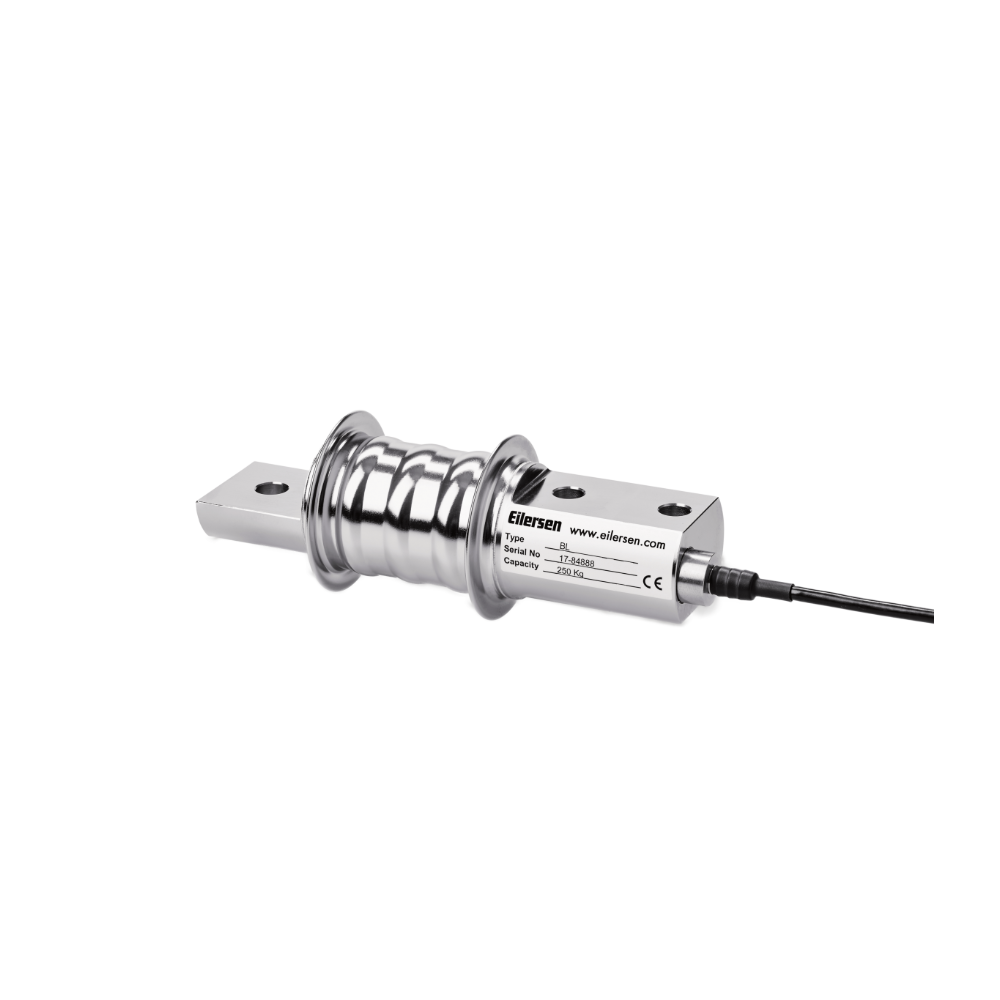
BL (BL-Ex)
Type:
BL (Non-ATEX)
BL-Ex (ATEX)
Capacity (Emax):
10, 20, 30, 50, 100, 150, 250, 500, 1000 kg
Accuracy:
Industrial 0.10%
Precision 0.05%
High Precision 0.025%
Overload Tolerance:
500% at 5 kg
200% at 1000 kg capacity
BM (BM-Ex) 50

Type:
BM 50 (Non-ATEX)
BM-Ex 50 (ATEX)
Capacity (Emax):
1000 or 1500 kg (2000 kg pending)
Accuracy:
– Industrial 0.10%
– Precision: 0.05%
– High Precision: 0.025%
Overload Tolerance:
Up to 300%
SBL (SBL-Ex)
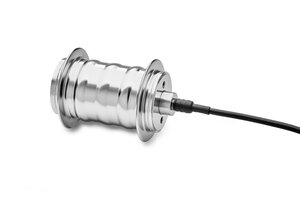
Type:
SBL (Non-ATEX)
SBL-Ex (ATEX)
Capacity (Emax):
1, 2, 5, 10, 20, 30, 50 kg
Accuracy:
High Precision 0.025%
Overload Tolerance:
500% at 1 kg
200% at 50 kg capacity
BM (BM-Bx) 70
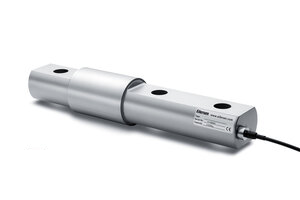
Type:
BM 70 (Non-ATEX)
BM-Ex 70 (ATEX)
Capacity (Emax):
1000, 1500, 2000, or 3000 kg
Accuracy:
– Industrial 0.10%,
– Precision 0.05%
– High Precision 0.025%
Overload Tolerance:
Up to 500% of rated capacity
BM (BM-Ex) 80
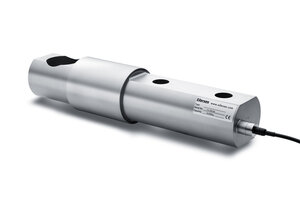
Type:
BM 80 (Non-ATEX)
BM-Ex 80 (ATEX)
Capacity (Emax):
5000, 6000, or 7000 kg
Accuracy:
– Industrial 0.10%
– Precision: 0.05%
– High Precision: 0.025%
Overload Tolerance:
Up to 500% of rated capacity
Example Applications
Beam load cells are commonly used in:
- skid-mounted process equipment
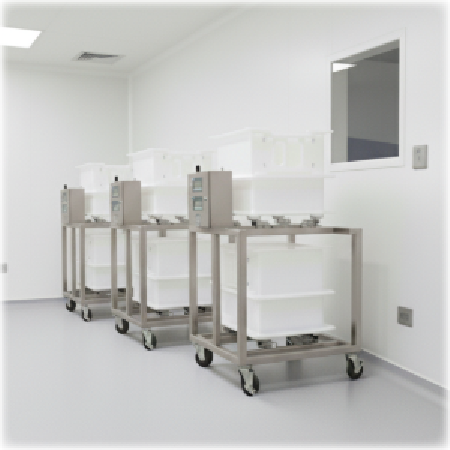
- mobile tank and tote weighing carts
- drum handling systems
- bioreactor and mixing stations
- hygienic weighing platforms
- mixing and blending skids
- wet inventory management processes
- upstream and downstream process support equipment
Mobile Weighing Systems
Beam load cells are well suited for mobile weighing applications, including carts, totes, and portable process equipment that move throughout a facility.
In these systems, measurement stability can be affected by:
- vibration during transport
- uneven floor conditions
- shifting load distribution
- lateral forces during handling
- overloading
- impacts from contact with walls, thresholds, or other equipment
- repeated movement between process areas
Eilersen beam load cells are commonly used in mobile weighing applications where maintaining measurement stability during movement is critical.
Typical Mobile Weighing Configurations
Portable weighing systems can be configured to support bags, totes, tanks, drums, and other process vessels. When built with Eilersen beam load cells, these configurations provide stable, accurate weighing in applications where equipment is frequently moved between process areas.
Typical configurations include:
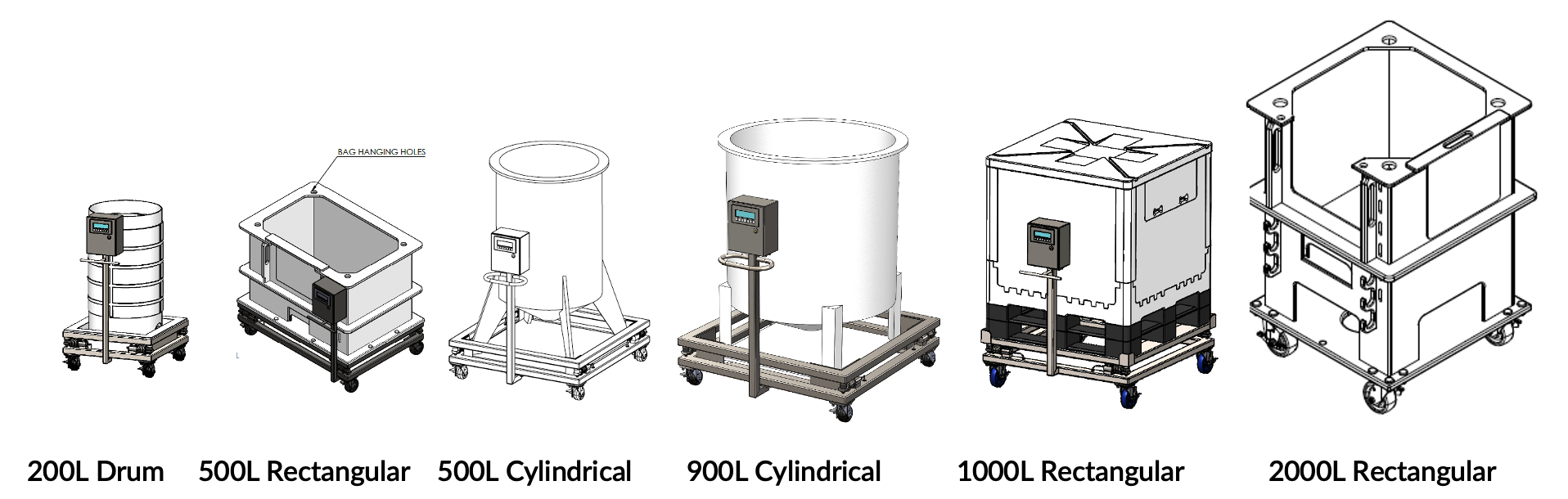
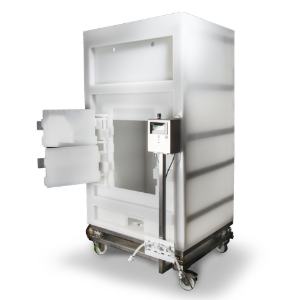
AccuCart is one example of a hygienic mobile weighing system built using Eilersen beam load cells. The same load-cell technology also supports many fixed skid and frame-based systems.
For a complete system example, see our exclusive AccuCart™ mobile weighing systems.
Skids & Structural Frames
Beam load cells are also commonly used in:
- modular skid assemblies
- framed process equipment
- support structures where lateral forces may occur
- integrated systems with pumps, mixers, or other sources of vibration
- equipment exposed to frequent operation and washdown
They are commonly used where the weighing system is built into a skid or support frame.
Key Design Considerations
To get the best performance from a beam load cell system, the supporting structure and the way the load is introduced into the load cell must be designed correctly.
Important considerations include:
- expected lateral forces and operational movement
- frame rigidity and structural deflection
- load introduction geometry
- protection from shock and overload events
- mounting method and restraint strategy
- washdown or hygienic design requirements
- hazardous-area requirements, if applicable
- calibration strategy and verification requirements
Acuity helps customers evaluate these factors during system design so the weighing system performs reliably under actual operating conditions.
Components and System Integration
Eilersen beam load cells integrate with Eilersen digital-weighing modules and digital-weighing indicators. They also support multiple fieldbus interfaces, including PROFINET, Profibus DP, EtherCAT, EtherNet/IP, Modbus TCP/IP, DeviceNET, RS485, 4-20 mA, and 0-10 Vdc.
Discuss Your Application
Acuity Process Solutions can help you select the right beam load cell configuration and integrate it into a complete weighing system for your process.