
Single-use bioreactors (SUBs) have become a cornerstone of modern bioprocessing, offering faster changeovers, reduced cleaning validation, and greater operational flexibility. As these systems scale to 5,000 liters and beyond, manufacturers gain the benefits of disposable technology at commercial volumes. One critical activity that has not been scaled efficiently is load cell calibration.
Traditional calibration practices can be costly, time consuming, and in some cases, operationally risky. As facilities look to reduce equipment downtime, improve accuracy, and minimize risk, the need for a smarter approach to load cell calibration has become increasingly clear.
Single-use bioreactors (SUBs) have become a cornerstone of modern bioprocessing, offering faster changeovers, reduced cleaning validation, and greater operational flexibility. As these systems scale to 5,000 liters and beyond, manufacturers gain the benefits of disposable technology at commercial volumes. One critical activity that has not been scaled efficiently is load cell calibration.
Traditional calibration practices can be costly, time consuming, and in some cases, operationally risky. As facilities look to reduce equipment downtime, improve accuracy, and minimize risk, the need for a smarter approach to load cell calibration has become increasingly clear.
Why Load Cell Calibration Matters
Load cells are fundamental to accurate bioreactor operation. They are used to measure vessel weight, calculate volume, control feeds, monitor mass balance, and support key process decisions. Accurate load cell data is essential for maintaining process control, ensuring batch-to-batch consistency, and meeting regulatory expectations.
Errors can translate into large absolute volume or mass deviations, potentially affecting product quality, yield, and overall process performance. Reliable and repeatable calibration is therefore a critical requirement.
Challenges of Traditional Calibration Methods
A common approach to calibrating load cells on SUBs is to install a single-use bag and fill it with a known volume of water. The measured weight is then compared against expected values to verify or adjust calibration. While this method is well understood, it presents significant challenges. High consumable costs, extended downtime and labor-intensive execution are presented when using a costly 5,000L Bag that requires multiple operators to set up fill, drain and tear down.
Utility constraints such as scheduling and the availability of purified water and the operational risks from leaks, spills, and equipment damage should also be considered. Bag failure can lead to flooding of equipment or even the manufacturing suite, creating safety hazards, unplanned downtime, and costly remediation.
Accuracy Challenges Driven by Specific Gravity
Water-based calibration also introduces a less obvious, but equally important limitation: accuracy. Many process fluids such as concentrated media, product, or buffers have a higher specific gravity than water. When calibrating with water, it may not be possible to fill the bag sufficiently to replicate the true operating weight of the process.
At large volumes, bags often cannot be filled to match the weight of the higher density fluids without exceeding practical or safety limits of the bag. As a result, calibration may only verify a portion of the load range, leaving the system unconfirmed at the weights that matter most during actual production.
The Need for a Better Calibration Approach
As SUBs continue to grow in size and importance, manufacturers need calibration methods that are faster, safer, more accurate, and better aligned with real-world operating conditions. Ideally, calibration should be:
- Independent of SU consumables
- Independent of existing type of load cells on equipment
- Quick and easy to perform with minimal downtime
- Accurate across the full operating load range
- Flexible enough to be performed whenever neededEquipment should be owned and operated by the facility to eliminate 3rd party calibration scheduling delays
- Equipment is convenient to handle and easily stored when not in use
This is where EilerCal’s waterless calibration technology offers a compelling advantage.
EilerCal Waterless Calibration System
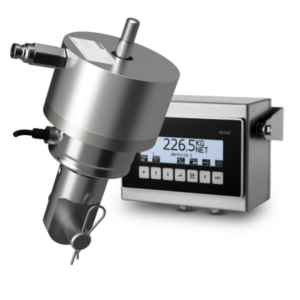 EilerCal provides a modern alternative to traditional water filled bag calibration. Instead of relying on liquid weight, EilerCal applies known, traceable loads directly to the existing load cell system or bioreactor structure. This allows calibration to be performed without installing or filling a single-use bag.
A full calibration can be completed in less than one hour, dramatically reducing downtime compared to conventional methods. Because no weights, water or disposable components are required, calibration can be performed safely, and efficiently, requiring only one operator, without the risks associated with liquid handling.
Calibrations Performed Anytime, Without Disruption
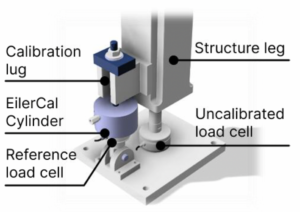 Flexibility is a key advantage of EilerCal’s waterless calibration technology, allowing for calibrations to be performed between batches, during commissioning or qualification, immediately to investigate or clear deviations, or as part of route maintenance. Delays from waiting on production scheduling or for bag availability are not an issue when calibrating with EilerCal. Independent of facility water usage and managing filling or draining logistics, makes for easier calibrations, with less planning, and is far less disruptive to the manufacturing operations.
Improved Accuracy and Reduced Risk
By applying controlled, traceable loads directly to the existing load cell system, EilerCal enables calibration across the full operating range of the bioreactor. This is particularly valuable when working with products that have a higher specific gravity than water, ensuring that calibration conditions accurately reflect real process loads.
At the same time, eliminating bag deployment removes the risk of bag rupture, leaks, or flooding. Equipment, suites and personnel are better protected, and valuable SU bags are reserved for production rather than calibration.
Compliance and Confidence
Calibration methods are evaluated based on accuracy, traceability, and documentation. EilerCal supports repeatable, traceable calibration and can be integrated into validated calibration and maintenance programs. In many cases, the ability to calibrate quickly and on demand improves compliance by enabling more frequent verification and faster resolution of measurement related deviations.
EilerCal’s reference load cell is independent of the existing load cells on the equipment and can be used to calibrate any brand name load cell.
Conclusion: A Smarter Way to Calibrate
EilerCal Waterless Calibration offers a fast, accurate and low risk alternative to traditional water-filled bag calibration for 5,000L (and up) single-use bioreactors. With full calibration of a SUB completed in under an hour, and the flexibility to calibrate at any time, without the risk of damage, flooding and the limitations and burden of water usage, manufacturers can skip all the hassle of the bag, reduce equipment downtime, eliminate deviations, and maintain confidence in their load cell performance.
Contact Acuity Process Solutions to learn more about EilerCal Waterless Calibration Technology and how it can simplify load cell calibration and enable bagless calibrations for large scale single-use bioreactors.
https://acuityprocess.com/load-cell-calibration-system-eilercal/
Author: Cathy Schmidt; Southeast Bioprocess Sales Specialist for Acuity Process Solutions